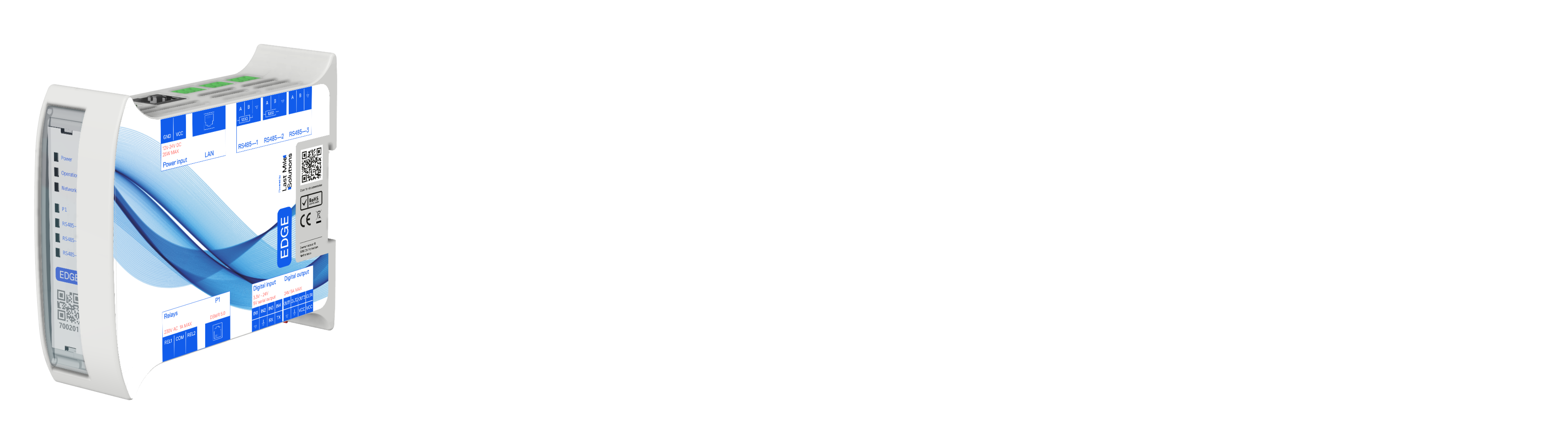
How does Edge work?
As EV charging infrastructure grows, local grid capacity becomes the bottleneck. Expanding the grid connection is expensive and slow. Edge solves this by dynamically distributing available power across chargepoints, solar inverters, and batteries — all without exceeding your grid limits.
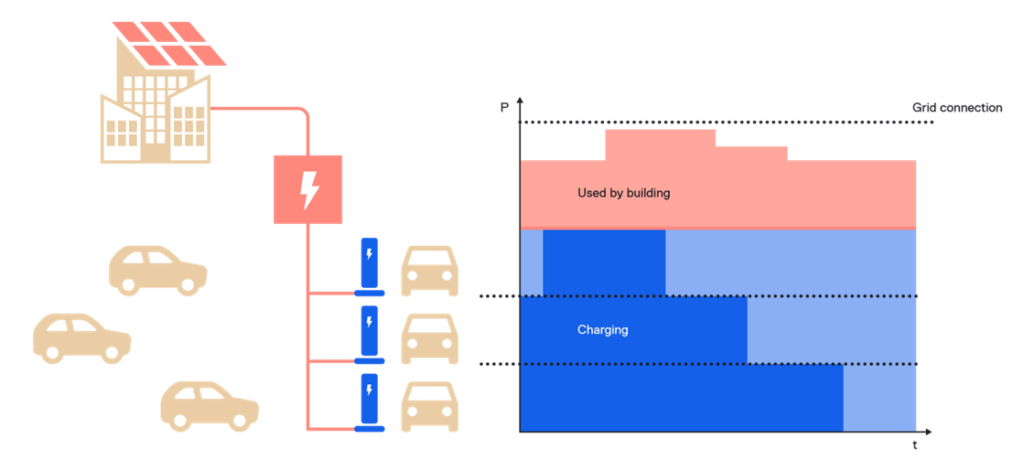
Where Edge sits
Edge is a physical device installed on-site, close to your chargepoints. It connects to your local network and communicates with all assets directly — no cloud dependency required for real-time load balancing.
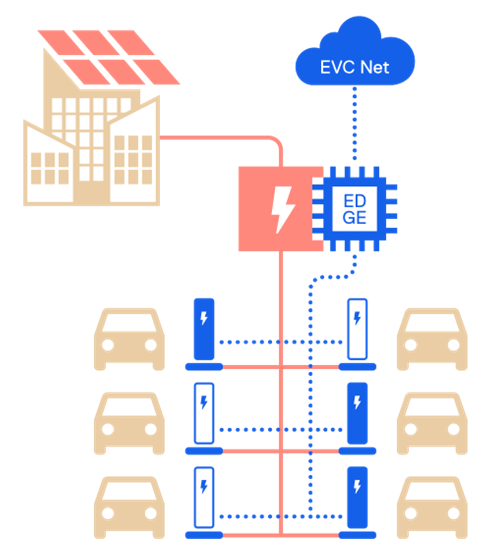
Measure, calculate, distribute
Edge runs a continuous loop across all three phases:
- Measure — Energy meters report real-time consumption at the grid connection and at sub-grids. Edge reads these over Modbus RTU or Modbus TCP.
- Calculate — Edge determines how much capacity is available by subtracting measured consumption (office loads, HVAC, etc.) from the grid limit. It factors in solar production, battery state, and configured priorities.
- Distribute — Edge sends charging profiles to each chargepoint via OCPP 1.6, telling it exactly how much current it may draw. This happens continuously — as loads change, chargepoints are rebalanced within seconds.
What Edge manages
| Asset | Role |
|---|---|
| Chargepoints | Receive dynamic charging limits per phase, report session data and connector status back to Edge |
| Energy meters | Measure real-time grid consumption at the main connection and optionally at sub-grids |
| Solar inverters | Feed real time solar information into the loadbalancer; enable curtailment if export is not allowed |
| Batteries | Enable peakshaving, self consumption and export limit enforcement |
| Back-office (CPO) | Charging session forwarding, remote commands, card authorization |
Edge supports up to 200 chargepoints per device and works across brands — it does not require chargepoints from a single manufacturer.
Offline resilience
Edge operates independently of the cloud. If internet connectivity drops:
- Load balancing continues uninterrupted using local measurements
- Charge cards are authorized from a local card database
- Transactions are stored locally and forwarded when connectivity returns
Configuration with EdgeManager
You configure and monitor Edge through EdgeManager, a web interface accessible from anywhere in the world. EdgeManager lets you define your grid topology, set fuse limits, assign energy meters, configure solar and battery integration, and monitor live energy flow.
Updated 6 months ago